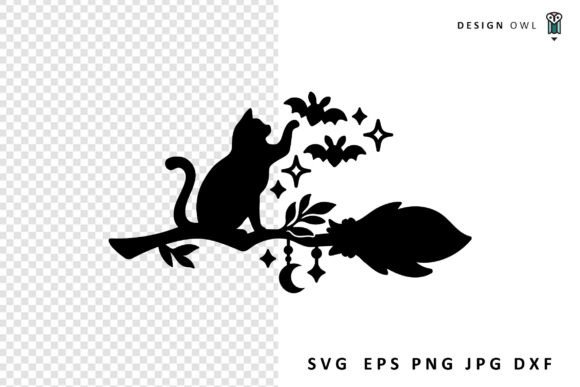
Cat Sitting on a Broomstick SVG
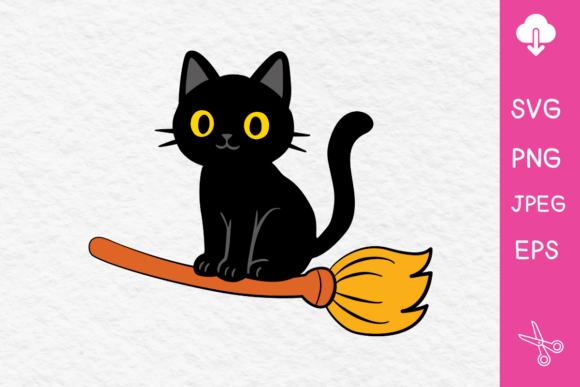
As someone who’s stitched hundreds of Halloween-themed machine embroidery designs—from boutique aprons to Etsy-listed baby onesies—I opened Cat Sitting on a Broomstick SVG expecting charm, but hoping for clarity. What I found wasn’t just a cute graphic—it was a design with quiet intention: balanced negative space, confident line weight, and a silhouette that reads instantly at 3 inches wide *and* holds up when scaled to 5 inches on a sweatshirt front. It’s the kind of embroidery file that feels like it was drawn by hand first, then digitized with respect for stitch behavior—not just traced and auto-filled.
A Real-World Test: Embroidering It on a Linen Tea Towel
Last week, I used Cat Sitting on a Broomstick SVG for a small-batch kitchen towel set—linen blend, medium-weight, hemmed edges. No applique, no background fill—just clean satin-stitched outlines and subtle fill stitch in the cat’s body and broom handle. The result? A finished product that looked handmade, not digital. Customers who saw the mockup before stitching responded immediately: “That’s my Halloween hostess gift sorted.” That reaction matters—it means the design carries mood without clutter, and communicates theme in under two seconds. That’s rare in holiday embroidery files, where too many elements compete for attention.
Where This Design Shines (and Where It Asks for Care)
Cat Sitting on a Broomstick SVG works beautifully for custom apparel and small-shop merchandise—but only when matched thoughtfully to fabric and purpose.
- Tote bags & aprons: Excellent. The vertical orientation and centered composition fit standard 4x4 or 5x7 hoops naturally. Stitch density is moderate—no overloading on fill areas—so it lays flat even on canvas or midweight cotton duck.
- Sweatshirts & hoodies: Strong candidate, especially on chest placement. The broomstick’s clean lines avoid distortion across ribbed knit; just use cutaway stabilizer and test tension on scrap first.
- Baby items & nursery decor: Surprisingly versatile. On organic cotton onesies or muslin pillow covers, the whimsy reads gently—not spooky—especially when stitched in mustard, charcoal, or sage thread colors.
- Patches & caps: Use caution. The broomstick’s thin end and cat’s tail taper into fine points—those can fray or disappear on curved surfaces or dense twill. If embroidering a cap, opt for a simplified version or add a light backing stitch outline.
- Dark or textured fabrics: Confirm contrast. The design relies on shape—not heavy shadowing—so white or light thread on black linen needs crisp stabilizing. Avoid ultra-napped fleece or bouclé unless you’re willing to adjust underlay manually.
What This Design Says About Your Brand (Without Saying a Word)
When your customer sees Cat Sitting on a Broomstick SVG on a handmade product, they’re subconsciously reading your standards: Is this playful but polished? Handmade but intentional? Festive but not frantic? This design delivers all three—because its proportions are resolved, its curves are smooth (not jagged), and its negative space breathes. That translates directly to perceived value. A poorly spaced or overly detailed Halloween embroidery file can cheapen an otherwise lovely tote bag. This one elevates it.
For Etsy sellers and craft fair vendors, that nuance affects buyer trust. People don’t just buy a cat on a broom—they buy confidence in your eye for detail, your understanding of how thread behaves, and your ability to deliver something that looks as good in person as it does in your printable mockup.
Practical Designer Notes Before You Stitch
This isn’t a “load-and-go” embroidery file—and that’s a good thing. It invites thoughtful execution. Here’s what I do every time:
- Test on scrap fabric first—especially if using textured or stretchy material. Watch how the cat’s ears and broom bristles hold up.
- Check thread color contrast in both natural and artificial light. Some golds or deep purples mute on dark backgrounds unless you boost stitch density slightly.
- Review stitch density in your embroidery software. If filling the cat’s body, ensure fill stitch isn’t so tight it puckers lightweight cotton.
- Confirm hoop size compatibility. The design fits comfortably in a 5x7 hoop, but verify exact dimensions in your software—some versions of the SVG may include slight bleed or registration marks.
- Inspect small details at 200% zoom: Are the broomstick’s bristles distinct? Does the cat’s eye read clearly at 1.5 inches tall? If not, simplify before digitizing.
- Test black-and-white mockups—this design’s strength is in silhouette, so if it reads well in grayscale, you’re golden.
- Use proper stabilizer: Tear-away for stable wovens, cutaway for knits or anything that will be washed often.
- Confirm licensing before selling finished products or bundling the file digitally. Since it’s listed as a Graphics product for Crafts, commercial use is likely permitted—but always double-check the seller’s terms.
Final Thought: A Design That Serves the Project, Not Just the Season
Halloween embroidery files flood the market every August—but most fade by November. Cat Sitting on a Broomstick SVG avoids that trap. Its balance, restraint, and clear visual hierarchy make it work beyond October: on a spring witchy tote, a fall harvest apron, or even a cozy winter pillow cover styled with dried eucalyptus and black candles. It’s not just a holiday embroidery file—it’s a flexible design asset. And for craft business owners building a recognizable style, that longevity matters more than any single seasonal spike.
If you’re choosing between dozens of cat-and-broom graphics, ask yourself: Which one will still feel fresh when you’re photographing it for your holiday email campaign next year? This one will.