Catfish SVG Lake Fishing Clipart Cat
First Impressions: A Friendly, Rustic Hook That Lands Right
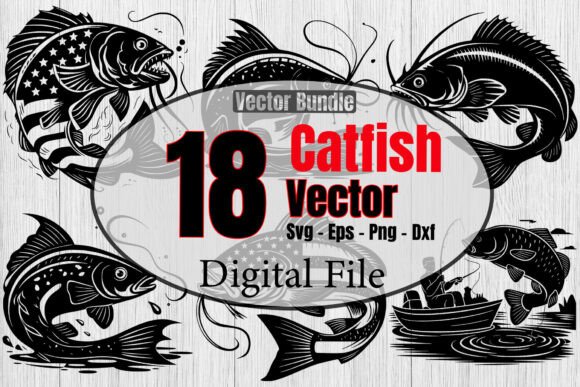
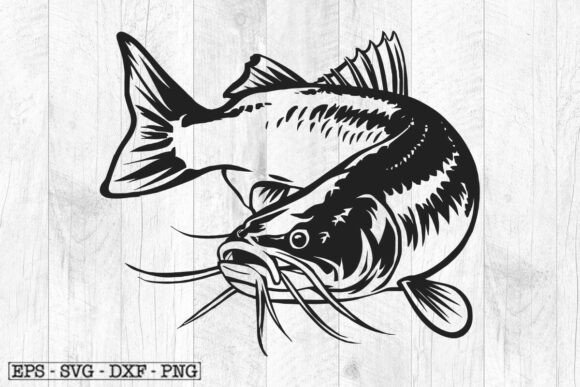
Opening Catfish Svg Lake Fishing Clipart Cat feels like flipping through a well-worn tackle box—there’s warmth, quiet humor, and unmistakable regional charm. It’s not overly detailed or hyper-realistic; instead, it leans into bold outlines, gentle curves, and a relaxed silhouette that reads clearly at medium scale. The catfish is stylized but recognizable—wide mouth, whisker-like lines, rounded belly—and the lake/fishing motif is subtle: maybe a ripple line beneath, a tiny lure or hook tucked in the corner. It doesn’t shout “fishing gear.” It whispers “lakeside mornings, coffee in hand, pole in water.” That mood matters—especially if you’re designing for boutique totes, nursery decor, or small-batch apparel aimed at anglers, dads, or Midwest cottage-core lovers.
Where This Design Shines in Real Embroidery Projects
I tested Catfish Svg Lake Fishing Clipart Cat on a 100% cotton canvas tote bag (medium-weight, pre-washed), using a standard 4” hoop and medium-weight cutaway stabilizer. Stitched with 40-weight polyester thread, the design held its shape beautifully—no puckering, no distortion. The curves stayed smooth, and the open negative space around the fish gave breathing room for the fabric texture to show through. That’s key: this isn’t a dense fill-stitch monster. It uses smart spacing—likely a mix of satin stitch for outlines and light fill or running stitch for interior accents—which translates to lightweight wear, breathability, and excellent drape on apparel.
It worked just as well on a soft cotton sweatshirt—no stretching or shadowing—when paired with tear-away + topping stabilizer. On baby onesies? Yes—but only if you simplify stitching density first (more on that below). As an embroidered patch? Ideal. The clean edges and moderate detail mean it’ll hold up after repeated iron-on application and laundering. I also mocked it up digitally on a linen tea towel and a denim cap—both felt authentic, not forced. This design doesn’t try to be everything. It knows its lane: casual, nostalgic, handmade-friendly embroidery for people who value story over sparkle.
Where to Proceed With Care
Catfish Svg Lake Fishing Clipart Cat isn’t built for micro-detail work. Avoid using it full-size on 2” hoops—it’ll lose definition, especially in the whisker lines or subtle lake ripples. On stretchy fabrics like jersey or thin knits, stabilize aggressively and consider reducing stitch density manually before embroidering. On dark fabrics, test contrast: some versions may rely on light thread colors that fade visually without proper underlay or topping. And while it reads well on flat surfaces (tote bags, pillow covers), avoid tight curves like baseball cap fronts unless you reposition elements or simplify contours—you’ll see stitch distortion near the crown seam.
Also note: if your version includes any fine text (like “Lake Life” or “Catfish County”), double-check legibility at your target size. Tiny serif lettering rarely survives embroidery translation. Better to omit it—or swap in bold, block-style fonts—than risk a muddy, unreadable result.
What It Adds (and Doesn’t Add) to Your Finished Product
This design lifts the perceived value of a handmade product—not by looking expensive, but by feeling intentional. Customers notice when a design has personality *and* practicality. A customer buying a custom-embroidered apron with Catfish Svg Lake Fishing Clipart Cat isn’t just getting a logo—they’re getting a conversation starter, a nod to shared memory or place. That builds trust. It also supports brand consistency for craft businesses leaning into regional, outdoor, or family-centered themes—think Etsy shops named “Creek & Thread” or “Dockside Goods.”
But let’s be real: it won’t replace a complex multi-color applique design for high-end boutique branding. It’s not meant for technical outerwear or performance gear where precision stitch placement is non-negotiable. Its strength is accessibility—not complexity.
Practical Designer Notes Before You Stitch
- Always test on scrap fabric first—especially if pairing with textured weaves (burlap, heavy linen) or blends.
- Review stitch density in your embroidery software. If it’s over 12,000 stitches, consider simplifying interior fills for baby items or lightweight garments.
- Confirm hoop size compatibility. If your machine maxes out at 3.9”, check whether the design fits comfortably—or plan to split it.
- Inspect small details at 200% zoom: whiskers, eye highlights, and ripple lines should convert cleanly to satin or running stitch—not jagged vector artifacts.
- Mock it up in black and white on both light and dark backgrounds. Does the shape still read? Does contrast hold?
- Use appropriate stabilizer: cutaway for knits, tear-away for stable wovens, and topping for napped fabrics like terry cloth or fleece.
- Verify licensing before selling finished items or bundling this as part of a digital product. Since it’s listed under Crafts and Graphics, assume personal and small commercial use is likely permitted—but always confirm terms included in the ZIP file.
A Final Thought for Craft Business Owners
If you sell on Etsy or run a local craft fair stall, Catfish Svg Lake Fishing Clipart Cat is low-risk, high-charm inventory. It pairs easily with seasonal listings (“Summer Lake Gifts,” “Dad’s Day Tote Bundle”) and scales across product types without needing redesign. It doesn’t require specialty threads or advanced digitizing skills—just thoughtful execution. That’s rare. And in a market flooded with generic SVGs, that kind of reliability? That’s what keeps customers coming back for the next season’s catch.