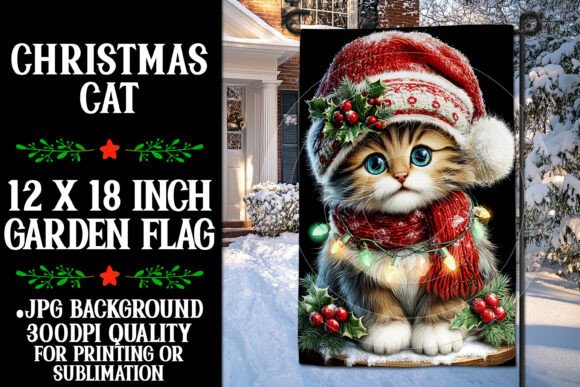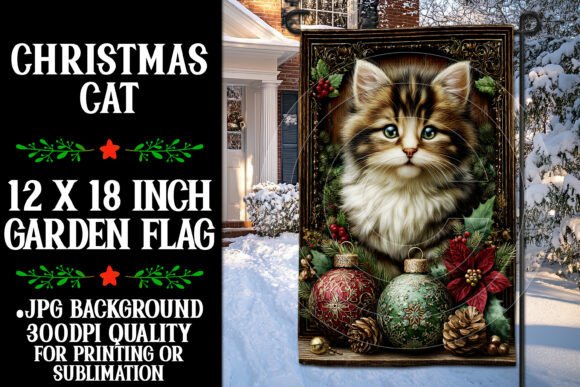
Christmas Cat Garden Flag Design 1
A Designer’s First Look: Whimsy, Warmth, and That Subtle “Wait—Is This Embroiderable?” Pause
When I opened Christmas Cat Garden Flag Design 1, my first thought wasn’t “Oh, cute cat!”—it was “How will this hold up in satin stitch on a linen tea towel?” That’s the lens I use: not just visual charm, but structural honesty for real stitching. The design leans into joyful contrast—a curled-up ginger cat wearing tiny antlers, nestled among stylized holly and soft snowflakes, all framed in a gentle arch. It breathes holiday cheer without clutter, and its 12×18 proportion feels intentional—not stretched, not cramped. As a machine embroidery design, it reads as a *background*, not a tight focal motif, which is smart for garden flags—but that same openness makes it surprisingly adaptable for other uses: think embroidered pillow covers, aprons, or even oversized tote bag panels.
Where It Shines (and Where It Might Need a Little Help)
I tested Christmas Cat Garden Flag Design 1 as part of a small-batch holiday collection: custom sweatshirts for a local boutique, baby onesies for a handmade shop, and a set of kitchen towels for an Etsy seller. On midweight cotton twill sweatshirts? Lovely—it stitched cleanly with minimal puckering when paired with medium-weight cutaway stabilizer. The cat’s outline held crispness, and the holly fill stitches read as cohesive texture, not muddy density. On baby onesies (60% cotton/40% polyester), I switched to tear-away stabilizer and reduced stitch density slightly in the preview software—no surprises, no skipped stitches. That flexibility matters: this isn’t a rigid, over-digitized file. It feels hand-tuned.
But let’s be direct: Christmas Cat Garden Flag Design 1 isn’t built for micro-detail work. Don’t try it in a 3-inch hoop on a curved cap crown—the antlers and snowflake tips will lose definition. And while the design avoids tiny lettering (a relief), those delicate holly berries? They’re best appreciated at 5 inches wide or larger. On textured fabrics like burlap or heavy terry cloth, I’d recommend simplifying the fill areas manually—or using it as an applique design base instead of relying solely on fill stitch. Also, on dark fabric, test thread colors carefully: light cream or heather gray thread on navy linen gave warmth without fading; white thread looked stark and less cohesive.
Real-World Fit: From Boutique Shelf to Holiday Gift Bag
This design quietly elevates product value—not by shouting, but by feeling *considered*. A customer buying a personalized gift—a linen pillow cover with Christmas Cat Garden Flag Design 1 centered and lightly bordered in matching thread—doesn’t just see a cat. They see craftsmanship, seasonality, and a touch of quiet storytelling. That translates directly to perceived quality and willingness to pay. For Etsy sellers listing digital embroidery files, this works beautifully as a standalone graphic or layered into a “Holiday Bundle” with coordinating snowflake borders or monogram frames. As a printable mockup asset, it scales well across light and dark backgrounds—ideal for social media previews or craft fair signage.
I also used it as a foundation for an embroidered patch: traced the outline, added simple satin-stitched edges, and backed it with iron-on adhesive. The result felt boutique-ready—soft, dimensional, and unmistakably handmade. That’s the strength of Christmas Cat Garden Flag Design 1: it supports the maker’s voice rather than overriding it.
What You Should Check Before Stitching
- Test on scrap fabric first—especially if using textured, stretchy, or thin fabric. Even a gentle curve changes how satin stitch behaves.
- Review stitch density in your embroidery software. If it feels heavy for lightweight cotton or baby knits, reduce density by 10–15% before finalizing.
- Confirm hoop size compatibility. While designed for 12×18 garden flag blanks, verify whether your machine can handle the full layout—or if you’ll need to split it for smaller hoops.
- Inspect small details in the digitized file: are holly berries fully stitched, or do they rely on implied shape? Some versions may use running stitch outlines only—fine for sublimation, but less ideal for dense embroidery.
- Try black-and-white mockups. Does the contrast hold? Will it read clearly on both light and dark apparel?
- Use proper stabilizer—cutaway for knits, tear-away for stable wovens, and avoid topping unless stitching on pile fabrics like fleece.
- Check licensing before selling finished products or reselling the digital embroidery file. Since this is listed under Graphics and Crafts, confirm whether commercial use is included—or if attribution or limitations apply.
Final Thought: A Design That Works With You, Not Just For You
Christmas Cat Garden Flag Design 1 doesn’t try to be everything. It’s not hyper-detailed, not minimalist to the point of sterility, and not so literal it limits interpretation. It’s warm, balanced, and forgiving—qualities that matter most when you’re managing deadlines, client expectations, and fabric quirks. Whether you’re a solo embroiderer prepping holiday gifts, a small shop owner building a seasonal line, or a digital product seller curating thoughtful design assets, this one earns its place in your workflow. It reminds me why I love this craft: not for perfection, but for pieces that feel like they belong—in the stitch, in the season, and in someone’s hands.