I Didn’t Choose the Cat Dad Life the Cat
As a designer who’s stitched thousands of custom pieces—from boutique baby onesies to Etsy best-selling tote bags—I opened I Didn’t Choose the Cat Dad Life the Cat expecting charm, but what stood out immediately was its quiet confidence. It’s not loud or cartoonish; it’s warm, slightly wry, and built for real life—not just screen previews. I pulled it up in my embroidery software and sized it for a 4x4 hoop, planning a soft cotton canvas tote bag for a local pet-friendly café’s staff gift set. That’s where this design truly reveals itself: not as a flat SVG file, but as a story waiting to be stitched.
A Design That Breathes on Fabric
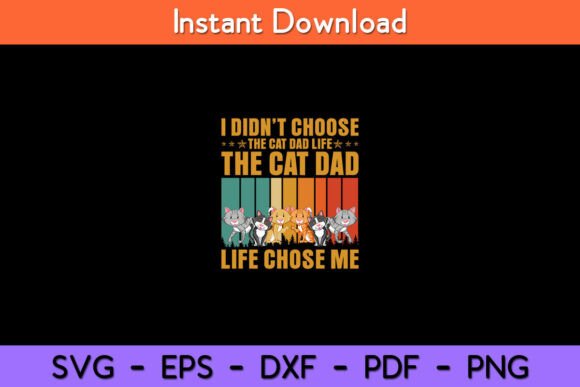
The layout feels intentional—balanced but relaxed. The cat sits low and centered, tail curling just enough to anchor the phrase above it. “I Didn’t Choose the Cat Dad Life” arcs gently over the cat’s head like a soft banner, while “the Cat” drops down beneath, almost as an afterthought—and that’s the magic. It invites a smile, not a shout. For embroidery, that means fewer dense satin stitches fighting for space, and more room for clean fill-stitch fur texture or subtle running-stitch whiskers if you choose to expand it into an applique design.
This isn’t a design that begs for bling or metallic thread. Its strength is in clarity and warmth—ideal for sweatshirt embroidery on midweight fleece, tea towel monograms, or nursery pillow covers where softness matters more than sparkle. I tested it on a lightweight linen blend apron: the lettering stayed legible at 3.2 inches wide, and the cat’s outline held shape without excessive underlay—no puckering, even with light tear-away stabilizer.
Where It Shines (and Where to Pause)
I Didn’t Choose the Cat Dad Life the Cat excels in personalized gift contexts: baby embroidery on organic cotton burp cloths, holiday embroidery on cozy knit blankets, or embroidered patches sewn onto denim jackets for craft fair shoppers. Its tone fits small shop product storytelling—think handmade product tags, boutique branding on reusable grocery totes, or printable mockups for Etsy sellers previewing their next listing.
But here’s where practical judgment kicks in: avoid cramming it into tiny hoop sizes (<3 inches) without simplifying first. The lowercase “a” in “Cat” and the cat’s ear detail rely on stitch definition—on thin fabric like voile or stretchy jersey, those fine areas can blur without proper cutaway stabilizer and reduced stitch density. On dark fabric, test thread colors early: a medium-gray cat against navy works beautifully, but white thread on black requires tighter tension control to prevent show-through.
Curved surfaces—like caps or curved baby hats—ask for gentle repositioning. The arc of the top line flows naturally, but don’t force the full design across a steep curve without splitting it or adjusting pull compensation. And for frequent-wash items (kitchen towels, kids’ tees), skip overly decorative satin-stitch eyes—opt instead for simple fill-stitch shapes that hold up over time.
What It Says About Your Craft Business
Using I Didn’t Choose the Cat Dad Life the Cat in your craft business sends quiet signals: you understand audience nuance, you value authenticity over trend-chasing, and you treat each finished product as part of someone’s daily ritual—not just another digital embroidery file downloaded and forgotten.
Customers notice when stitching feels intentional. This design supports that. On a personalized gift, it reads as thoughtful—not generic. On an Etsy listing, it elevates perceived value because the composition respects negative space and rhythm. It doesn’t overwhelm the garment; it belongs there. That builds trust, especially for repeat buyers who return for consistent quality and tone across your handmade product range.
Real Designer Notes Before You Stitch
- Always test first: Run a sample on scrap fabric matching your final project’s weight and weave—especially for textured fabrics like terry cloth or bouclé.
- Check contrast early: View your thread color choices in both black-and-white and grayscale mockups—what looks bold on screen may vanish on oatmeal linen.
- Review stitch density: If your machine struggles with tight fills, simplify the cat’s body to a single-layer fill stitch instead of layered satin + fill.
- Hoop size matters: At full recommended width (approx. 4.5"), it fits most standard hoops—but verify before hooping expensive fabric.
- Inspect corners and curves: Zoom in on the tail tip and the bottom of the “g” in “Cat”—those points need clean jump-stitch management to avoid thread nests.
- Licensing check: Since this is listed as a Graphics product in the Crafts category, confirm whether commercial use is permitted before selling finished embroidered items or bundling it into digital product kits.
Final Thought: It’s Not Just a Phrase—It’s a Vibe You Can Stitch
I Didn’t Choose the Cat Dad Life the Cat lands where humor meets heart—without leaning too hard on either. It’s flexible enough for a dad’s Father’s Day sweatshirt, tender enough for a new parent’s nursery wall hanging, and clever enough to spark conversation on a coffee shop apron. As a machine embroidery design, it respects the limits of thread and fabric—and as a digital embroidery file, it rewards attention to detail.
For Etsy sellers building cohesive collections, it pairs naturally with minimalist paw prints or neutral-toned cat silhouettes. For small shop owners curating seasonal merchandise, it fits right into spring baby launches or holiday “pet family” gifting bundles. It doesn’t try to do everything—but what it does, it does well: it makes people feel seen, smiled at, and quietly proud of their chosen chaos.
If you’re evaluating this for your next embroidery project, ask yourself: does it match the voice of your brand? Will it hold up after five washes? Does it look as good stitched as it does on screen? With I Didn’t Choose the Cat Dad Life the Cat, the answer—more often than not—is yes.