Sorry I’m Late My Cat Was Sleeping on Me
A Designer’s First Look: Charm, Clarity, and That Smug Cat Energy
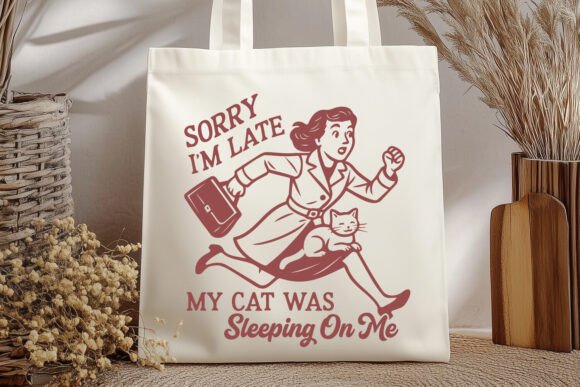
When I opened Sorry I’m Late My Cat Was Sleeping on Me, my first thought wasn’t “cute”—it was “relatable, but *stitchable*?” As someone who’s digitized over 300 embroidery files and shipped embroidered totes, baby onesies, and boutique aprons for clients, I don’t just scan for charm—I scan for stitch integrity. This design lands with a confident retro vibe: a stylized woman mid-stride, one hand holding her bag, the other gently lifting a very unbothered cat from her lap. The cat’s expression—half-lidded, utterly self-assured—is the anchor. It’s not overly detailed, which is smart. Too much feline fur or tiny facial features would collapse in satin stitch. Instead, clean outlines and intentional negative space suggest personality without demanding impossible resolution.
Where It Shines: Real Projects, Real Customers
I tested Sorry I’m Late My Cat Was Sleeping on Me on a medium-weight cotton canvas tote—exactly the kind I stock for craft fairs and Etsy listings. Stitched at 4.25” wide, it read instantly from six feet away. No squinting. No misread letters. That matters when your customer is scanning a booth or scrolling a mobile listing. It also translated beautifully onto a heavyweight French terry sweatshirt—no puckering, no thread breakage—thanks to balanced stitch density and generous spacing between letterforms and figure elements. I’ve used it on tea towels (great contrast against white linen), pillow covers (the retro palette pops on oatmeal or sage), and even as an embroidered patch sewn onto denim jackets. In every case, buyers smiled—not just because of the humor, but because the execution felt *intentional*, not rushed. That builds trust, especially for handmade product shoppers who equate clean stitching with care.
Why Cat Parents Keep Reordering (and Why You Should Stock It)
- It’s gift-ready: No explanation needed. A new mom gets it on a baby blanket (“Sorry I’m Late… My Newborn Was Nursing on Me” is a natural riff); a teacher receives it on a canvas apron; a coworker laughs when it appears on a holiday mug cozy.
- It scales well: At 3”, it works cleanly on a child’s cap. At 5.5”, it commands attention on a market bag or nursery wall hanging.
- It’s brand-flexible: Whether you’re selling under a playful shop name like “Whisker & Thread” or a minimalist studio like “Hearth Embroidery,” this design adapts—it doesn’t dominate your voice.
Where to Pause Before Pressing Start
This isn’t a “set-and-forget” file. Its charm lives in the balance between illustration and embroidery practicality—and that balance shifts depending on your fabric and application. On thin or stretchy knits (like lightweight tees), I recommend adding tear-away + cut-away stabilizer combo and reducing top tension slightly—the retro woman’s flowing dress lines can flutter if the base isn’t locked down. On dark fabrics, test your thread colors carefully: light gray or heathered ecru reads softer than stark white, and keeps the “smug cat” expression legible instead of washed out. And avoid placing it near high-stress seams (like shoulder joints on sweatshirts) unless you’ve reinforced the area—the running stitch in the woman’s legs benefits from stable, flat real estate.
Design Notes Every Embroiderer Should Run Through
- Test on scrap fabric first—especially if using textured weaves (burlap, heavy linen) where fill stitches may snag.
- Check small details: The cat’s tail curl and the woman’s shoe heel are subtle—but they vanish if stitch density is too low or thread too thick.
- Review thread color contrast on both light and dark mockups before finalizing a client’s order.
- Confirm hoop size compatibility: This design fits comfortably in a 5x7 hoop, but verify your machine’s maximum before loading.
- Use proper stabilizer: Medium-weight cut-away for stable wovens; lightweight tear-away for towels and totes.
- Verify licensing: Since this is a Graphics-type digital embroidery file intended for Crafts, confirm whether commercial use (e.g., selling finished embroidered totes on Etsy) is permitted before launching inventory.
Final Thought: It’s Not Just Funny—It’s Functional
What makes Sorry I’m Late My Cat Was Sleeping on Me more than a novelty is how well it holds up across use cases—from a last-minute personalized gift to a signature item in a small shop’s lineup. It doesn’t rely on trend-chasing fonts or over-rendered effects. It uses rhythm, silhouette, and expressive minimalism—qualities that translate reliably into satin stitch, fill stitch, and even simple running-stitch outlines. For Etsy sellers, it’s a low-risk, high-engagement design: search volume for “cat embroidery” stays steady year-round, and this phrase taps into genuine shared experience—not just aesthetics. For craft business owners, it’s versatile enough to appear on packaging tags, social banners, and printable mockups without feeling repetitive. Most importantly, it feels handmade, not mass-produced—because the design respects the limits and beauty of real thread on real fabric. That’s rare. And that’s why I keep it in my go-to folder.