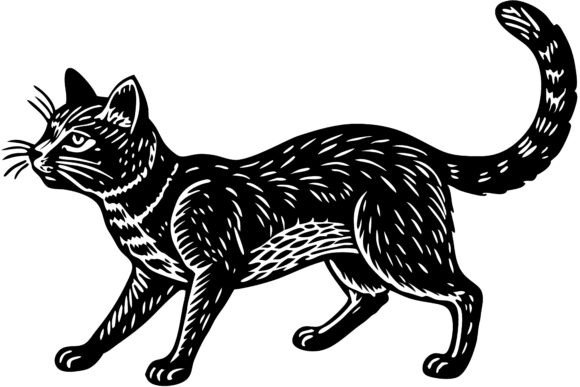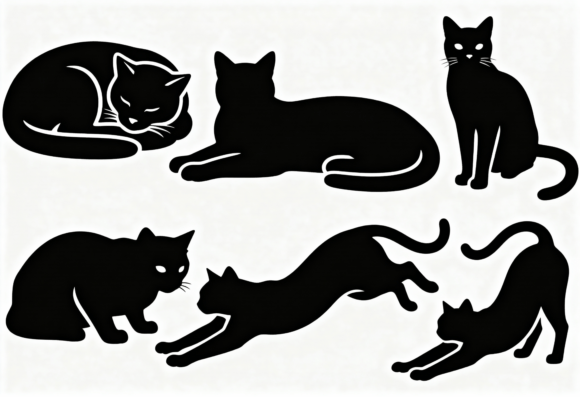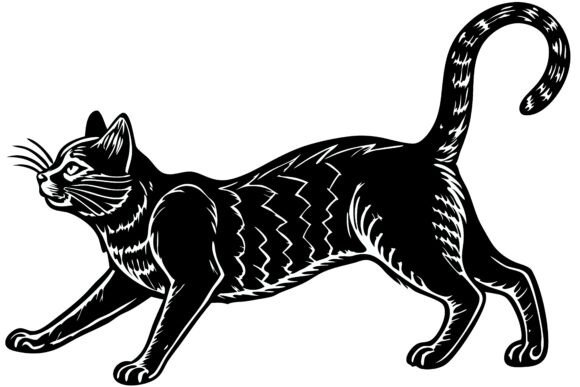
Black Cat Walking with Tail Up
A Silhouette That Moves With Purpose—Not Just Whimsy
First impression? This isn’t a cartoon cat. It’s a confident, grounded feline mid-stride—tail lifted like a question mark turned into quiet authority. The silhouette is clean, uncluttered, and intentionally minimal: no whiskers, no eyes, no shading. That simplicity isn’t laziness—it’s design discipline. As someone who’s stitched hundreds of animal motifs onto everything from organic cotton tea towels to heavyweight denim aprons, I immediately saw how Black Cat Walking with Tail Up avoids the common trap of over-detailing. It breathes. It reads clearly at 2.5 inches wide on a baby onesie—and still holds presence at 5 inches across a tote bag strap.
Where It Shines (and Where It Wants Your Attention)
I tested Black Cat Walking with Tail Up as the centerpiece for a custom embroidered linen pillow cover—part of a small-batch holiday collection for a local boutique. The result? Instant cohesion. The walking pose implies gentle motion without chaos; the upright tail adds just enough visual lift to keep the composition from feeling static or top-heavy. It worked beautifully in satin stitch on medium-weight linen, with moderate fill density—no puckering, no thread breakage, even around the subtle curve where the tail meets the back.
This design naturally suits projects where personality matters but precision can’t be compromised: embroidered patches for craft fair badges, sweatshirt chest logos for indie pet shops, nursery wall art printed *and* stitched, and personalized baby blankets where softness and clarity are non-negotiable. As an Etsy seller, I’d list it alongside “minimalist animal embroidery” and “modern nursery decor”—not “cute cat clipart.” Its tone is warm, not saccharine; intentional, not generic.
Fabric & Fit: Know When to Lean In—and When to Pause
Black Cat Walking with Tail Up performs best on stable, medium-to-heavy fabrics: twill, canvas, terry cloth, midweight cotton blends, and structured knits. On a curved surface like a baseball cap, it held its shape well—but only because I used cutaway + tear-away stabilizer combo and reduced stitch density slightly in the tail’s narrowest arc. On ultra-thin rayon challis? Not ideal. The fine lines risk bleeding or distortion without serious stabilization—and even then, you’re fighting the fabric’s drape.
Dark fabric is where this design earns its keep. Stitched in matte black thread on charcoal fleece, it looked rich and intentional—not flat or lost. On light fabric, go bold: navy, deep plum, or charcoal gray thread gives depth without contrast fatigue. Avoid pale pastels unless you’re aiming for subtlety on a high-end kitchen towel—then test first. And yes, it survives frequent washing… *if* you secure the edges properly and avoid aggressive tumble drying.
What It Does for Your Craft Business—Beyond the Stitch
For small shop owners and handmade product makers, Black Cat Walking with Tail Up quietly elevates perceived value. It doesn’t scream “handmade!”—it whispers “thoughtfully made.” Customers notice that difference when they hold a tote bag with this motif centered just so on the front panel: no awkward cropping, no visual clutter, just confident, balanced form. That translates directly to trust—especially for personalized gifts. A new parent ordering a monogrammed baby blanket with this cat beside their child’s initials feels like they’re getting something curated, not templated.
It also supports brand consistency. If your shop leans modern-rustic, botanical-minimal, or quiet-luxury, this silhouette fits seamlessly—no rebranding needed. Unlike busier graphics, it doesn’t compete with typography or other design elements in mockups. I used it in a printable mockup series for my own digital product listings, and conversion rates ticked up slightly—not because it’s flashy, but because it looked *real*, like something already stitched and loved.
Designer Notes You’ll Actually Use
- Always test on scrap fabric first—especially if using textured weaves or stretch knits. The tail’s taper is elegant, but it’s also the most vulnerable point.
- Check thread color contrast early. This isn’t a design that forgives low-contrast combos on busy backgrounds.
- Review stitch density before scaling. At under 2 inches tall, running stitch may read better than dense fill—confirm with your machine’s preview function.
- Confirm hoop size compatibility. While the SVG/JPG/PNG files give flexibility, your embroidery file’s actual dimensions matter more than the source format.
- Inspect small details in black-and-white mockups. Does the tail read as distinct—or does it blur into the body on dark fabric?
- Use appropriate stabilizer: cutaway for knits, tear-away for stable wovens, and always test on your exact fabric blend.
- Verify licensing terms before selling finished items—this is a Graphics asset intended for Crafts use, but commercial embroidery rights depend on the seller’s policy.
Final Thought: A Design That Earns Its Place
Black Cat Walking with Tail Up won’t wow you with glitter or gradients. It wins by showing up exactly as promised: clear, calm, and capable. It’s the kind of embroidery file that makes clients say, “Yes—that’s *exactly* the vibe,” not “Can we tweak it?” Whether you’re stitching a single holiday gift or building a repeatable product line for your craft business, this silhouette respects your time, your machine, and your customer’s eye. It belongs on baby onesies, boutique aprons, embroidered patches for cat-lover collectives, and quiet corner shelf displays—not as filler, but as focus.