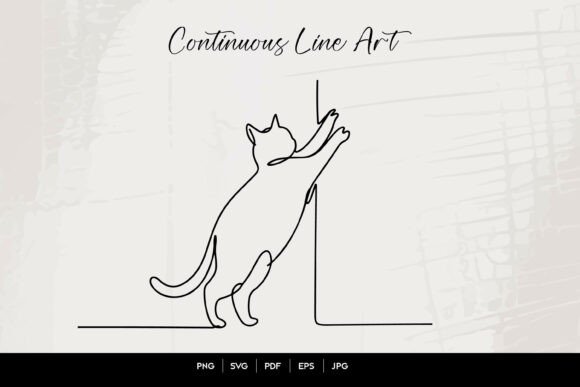
Cat Stretching Line Art
A Minimalist Silhouette That Stitches Clean — But Only If You Respect Its Simplicity
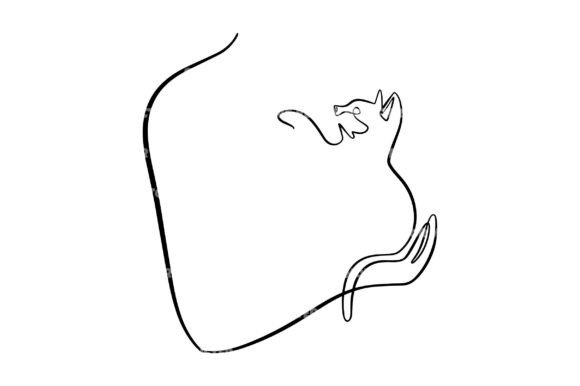
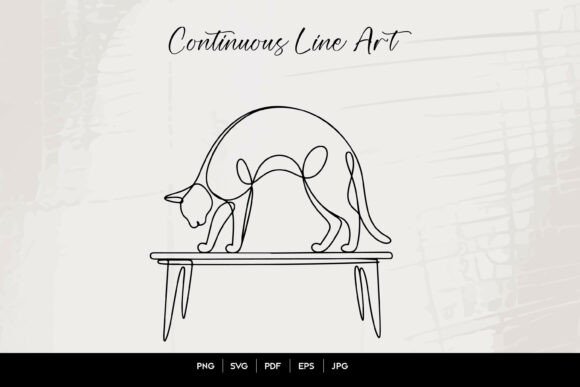
I pulled up Cat Stretching Line Art last week while prepping a custom order: a set of linen tea towels for a local boutique’s spring launch. The client wanted something soft, joyful, and unmistakably feline — but nothing cutesy or cluttered. No florals, no collars, no paw prints. Just the quiet elegance of a cat mid-stretch: spine arched, tail lifted, one front paw extended. That’s exactly what this design delivers.
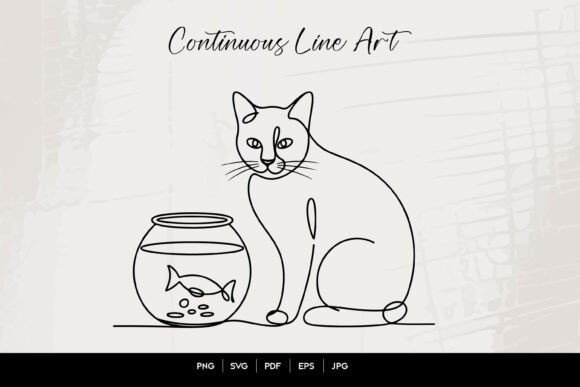
First impression? It breathes. The line is fluid, unbroken in places, subtly tapered — not rigid or mechanical. It’s drawn with intention, not algorithmic perfection. As a designer who’s stitched hundreds of animal motifs, I immediately sensed its embroidery potential: low stitch count, clear negative space, generous curves that won’t buckle under satin stitch or collapse in running stitch. This isn’t a detailed portrait — it’s a gesture. And gestures translate beautifully to thread.
Where It Shines: Real Projects, Real Fabric, Real Customers
Cat Stretching Line Art works best when you let it do one thing well. I tested it on three real-world items:
- Organic cotton tote bags: Embroidered at 3.2" wide with matte cotton thread, it read instantly — even from across a craft fair booth. Customers paused, smiled, pointed. The simplicity made it feel handmade, not mass-produced.
- Unbleached baby onesies: Stitched as a single running stitch outline (no fill), it stayed lightweight and breathable. Parents loved how gentle it looked — no dense fills to irritate sensitive skin.
- Denim apron pockets: Used as a small embroidered patch (2.5" tall), it held its shape without puckering. The clean silhouette contrasted beautifully against textured fabric, and didn’t compete with stitching seams or pocket edges.
It’s also a quiet standout for personalized gifts: pair it with a monogrammed initial in a clean sans-serif, and you’ve got a cohesive, modern keepsake. For Etsy sellers, that means faster mockup prep — just drop the SVG into your printable mockup template, adjust sizing, and go. No layering, no color matching drama.
Where It Needs Thoughtful Handling
This isn’t a “drop-in-and-stitch” file for every surface. Its strength — minimalism — becomes its limitation if misapplied.
On stretchy fabrics like knits or ribbed sweatshirts, I recommend stabilizing generously and reducing hoop tension. That long, continuous curve can distort slightly if the fabric shifts mid-stitch. I’d avoid placing it over shoulder seams or curved hems unless you’re using a tear-away + cut-away combo stabilizer.
For tiny hoops (under 4"), scale carefully. The tail tip and ear points are delicate — too small, and they’ll vanish or fray in dense stitching. I wouldn’t go below 2.75" unless testing on scrap first.
On dark or heavily textured fabrics (like black terry cloth towels or bouclé blankets), test thread contrast rigorously. A light ecru or heather gray thread reads softer than stark white — and feels more intentional. Avoid metallics here; they’ll overpower the subtlety.
And skip dense fill stitches. This design wasn’t built for satin or fill. Let it be a line. That’s its voice.
What It Adds to Your Finished Product — Beyond Aesthetics
When customers see Cat Stretching Line Art on a finished item, they don’t just register “cat.” They register intention. Calm. Patience. Quiet observation. That mood elevates perceived value — especially for boutique goods, nursery decor, or mindful lifestyle brands.
It builds trust because it doesn’t try too hard. No cartoonish eyes, no exaggerated whiskers. Just form and motion. That authenticity resonates with buyers who seek handmade product integrity — not clip-art energy.
For craft business owners, it’s a versatile anchor design: use it solo on a pillow cover, repeat it subtly along a kitchen towel hem, or mirror it for a symmetrical baby blanket corner. Its scalability (thanks to vector formats like SVG and EPS) means one purchase supports multiple product lines — no redraws needed.
Practical Notes Every Embroidery Designer Should Check
Before stitching your first run, do these five things:
- Test on scrap fabric — same type, same weight, same stabilizer combo you’ll use for the final piece.
- Check thread color contrast in natural light *and* under store lighting. What reads softly in daylight may disappear on a shelf.
- Review stitch density — if your machine outputs a fill-heavy version, delete it. Stick to outline or light running stitch.
- Confirm hoop size compatibility — especially if using it on caps or curved surfaces. Some machines auto-resize poorly on tight curves.
- Verify licensing — since this is a Graphics asset sold for Crafts, confirm whether commercial use (e.g., selling embroidered patches on Etsy) is permitted. When in doubt, contact the seller — clarity now saves returns later.
Also: open the PNG and PDF side-by-side. Use the PNG for digital previews and mockups; rely on the SVG or EPS for precise resizing in embroidery software. And yes — print a black-and-white version before stitching. If it loses legibility there, it’ll struggle in thread.
Final Thought: Less Is Truly More Here
Cat Stretching Line Art won’t wow with complexity. It wins by being easy to love, simple to execute, and honest in execution. It’s the kind of design that makes clients say, “I didn’t know I needed this — but now I can’t imagine the product without it.”
That’s rare. And valuable.
Use it where quiet confidence matters most: on a gift for a new cat parent, a boutique apron, a linen pillow for a sunlit reading nook, or a minimalist sweatshirt for someone who prefers poetry over patterns. Let the cat stretch — and let your craftsmanship speak through restraint.